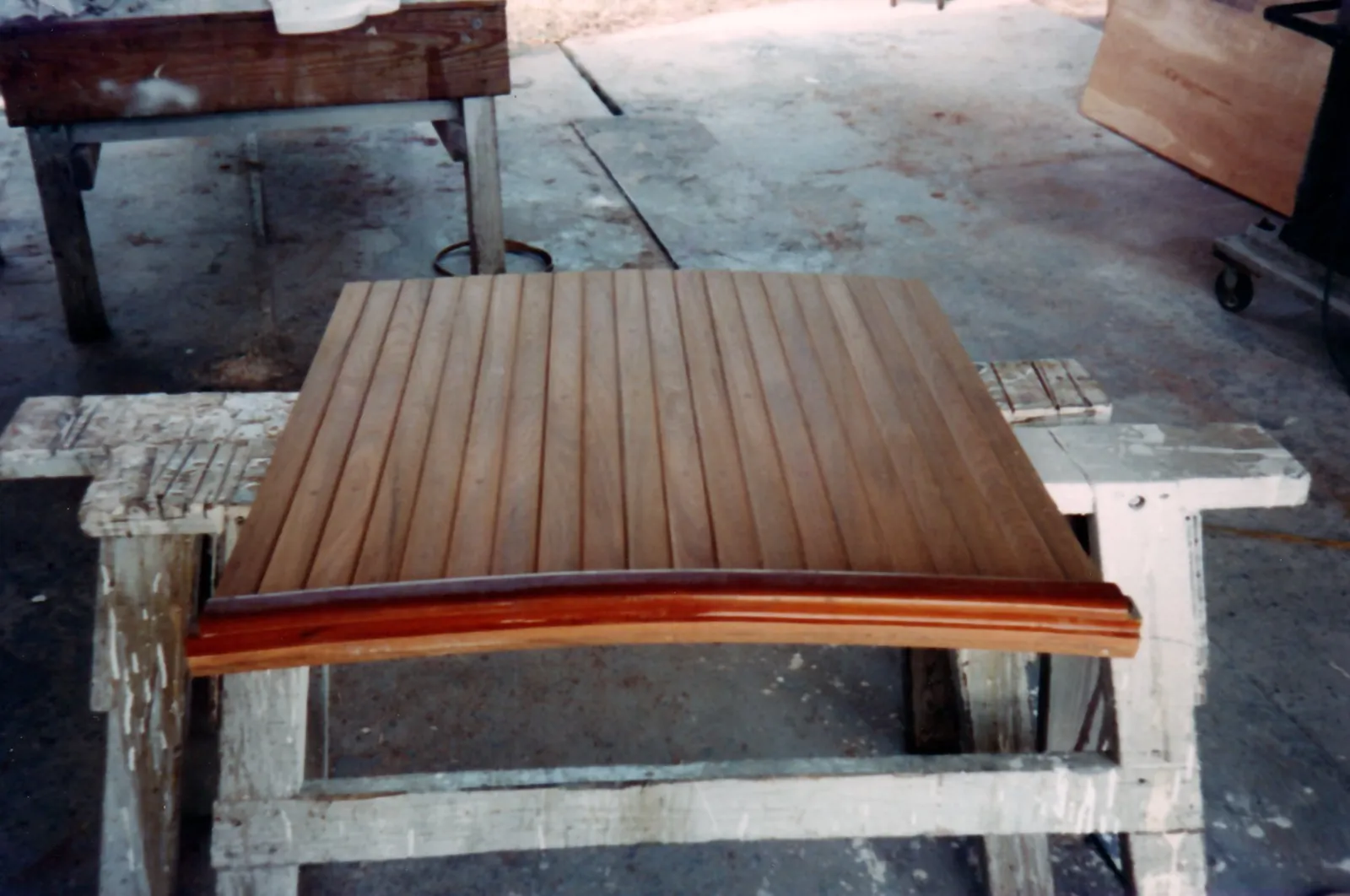
Exterior trim and interior wood brought back to a finish that lasts, from a full spar varnish build to a lower-maintenance teak oil or synthetic recoat. Deck surfaces are handled separately by teak decking.
Send a few photos of the trim, rails, or hatches you want refinished. You will get a real read on prep, finish choice, and what it takes to get there.
Varnish that is peeling, clouding, or cracking after only a season or two
Teak trim that has gone gray or dried out between recoats
Water spotting or a cloudy film showing up in the finish
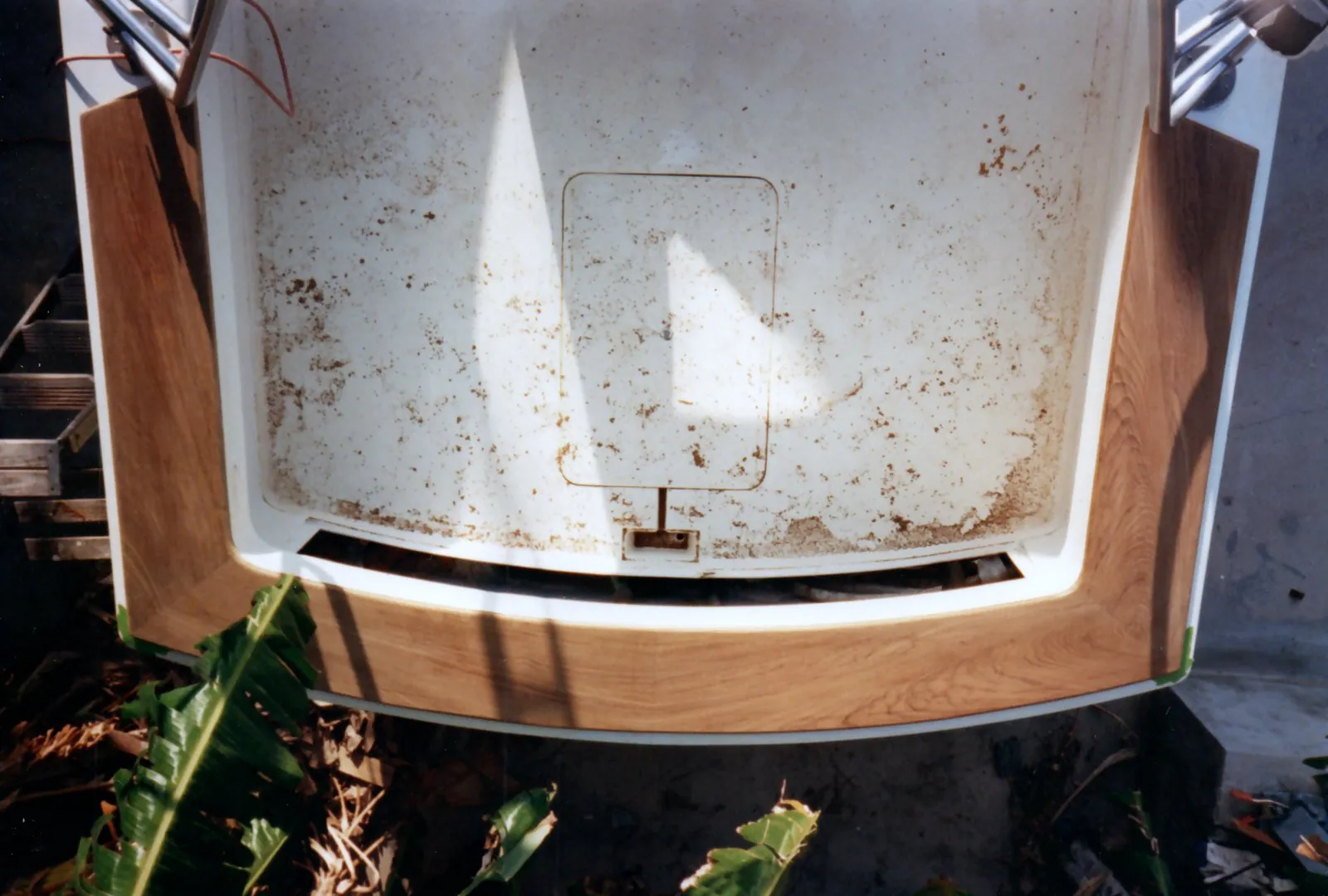
Hatches, rails, or a transom that look tired next to the rest of a well-kept boat
A finish that was never sanded back properly before recoating
Interior wood trim or furniture that has lost its shine
Brightwork often connects to these specialties.
A call or a few photos through the estimate form is enough to start. What trim or hatches need attention, and the current finish condition.
Brightwork is quoted after seeing the wood and current finish in person, since the right approach depends on how much old finish and wear is already there.
Spar varnish, teak oil, and synthetic finishes trade off differently between look, UV resistance, and maintenance frequency, discussed honestly against how the boat actually gets used.
Every coat is applied and finished under the master craftsman who quoted the job, and it is not finished until you have looked it over.
Spar varnish builds a glossy, built-up finish that needs the most prep and the most frequent recoating for the best look. Teak oil penetrates rather than coats, is easiest to maintain, but does not last as long between applications. Synthetic and Cetol-type finishes trade the clear gloss look for stronger UV resistance and a longer stretch between recoats.
It depends on the finish: teak oil typically needs recoating every few months, spar varnish roughly once or twice a year, and synthetic finishes can stretch to a year or two. Keys sun and salt air push all of these toward the shorter end of their normal range.
Brightwork Refinishing covers the varnished or oiled exterior trim, rails, hatches, and transoms, plus interior wood touch-up. Teak Decking covers the deck surface itself. Most boats need both on different schedules, and the two pages link to each other for that reason.
Old, failing finish generally needs to come off before a new coat goes on, regardless of which finish is chosen. Building a new coat over a breaking-down one just shortens how long the new finish lasts.
Yes. Salon trim, tables, and furniture get the same refinishing attention as exterior brightwork when the interior finish has dulled or worn through.
Synthetic and Cetol-type finishes generally require the least frequent attention, trading the classic clear varnish look for a pigmented, UV-resistant coating. Teak oil is easy to apply but needs more frequent recoats. The right choice depends on how much upkeep you want to take on.
Send a few photos of the trim or hatches in question. You will get a straight answer on prep, finish choice, and what it takes to get there.